Warehouse Construction for McKinney and Collin County
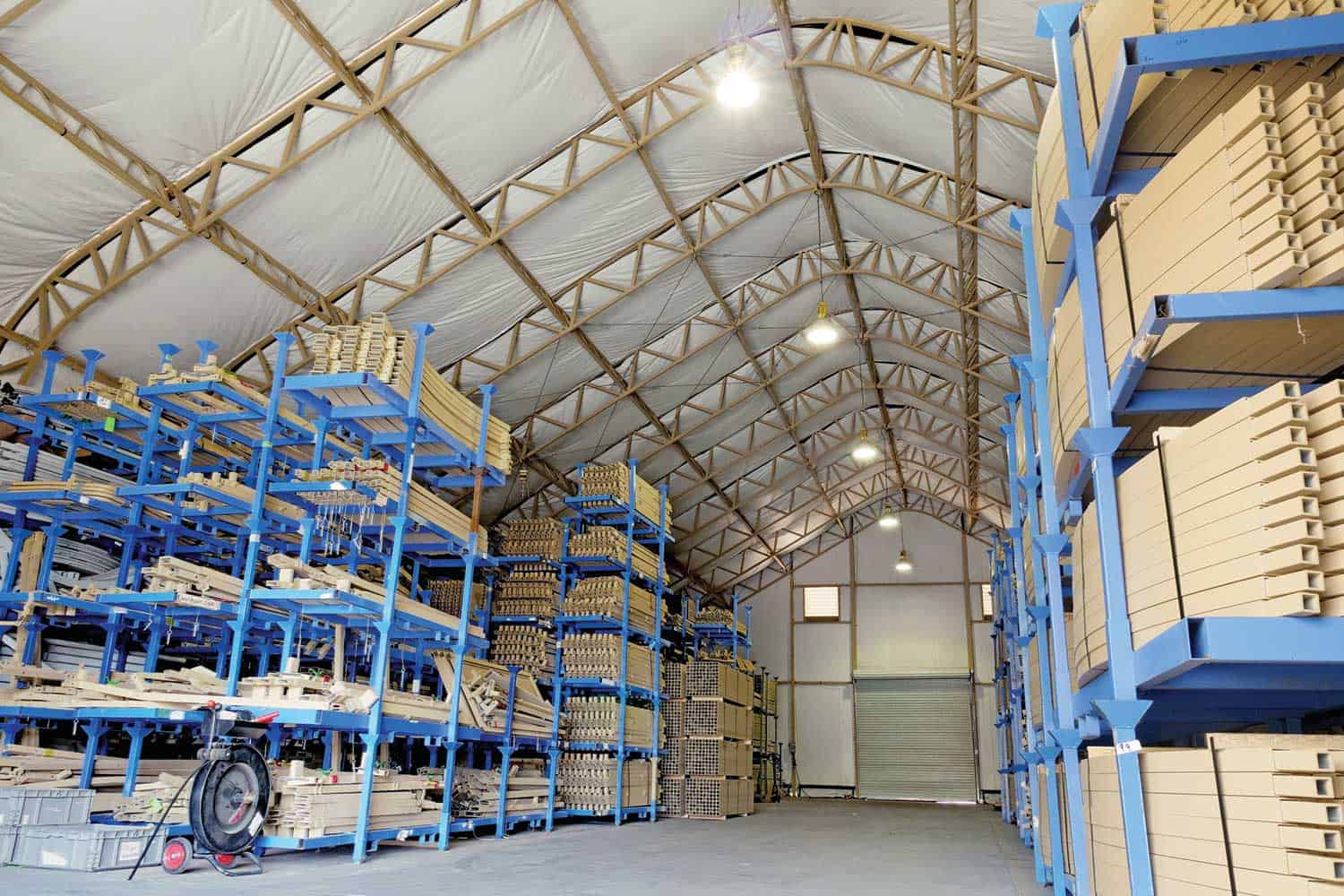
General Contractors of McKinney manages warehouse construction for owners and developers who need more than a shell on a slab. Modern warehouse facilities in McKinney and across the Collin County logistics corridor require dock sequencing, trailer court geometry, slab flatness for modern material handling, clear height coordination, and startup-ready turnover that supports operator or tenant occupancy without a post-construction shakeout period.
McKinney's position at the northern end of the DFW logistics market — connected to the broader network via US-75, the Sam Rayburn Tollway, and Hwy 380 — makes it an active location for warehouse development. The last-mile logistics layer that serves Allen, Frisco, Fairview, Princeton, Melissa, Anna, and Celina runs through or near McKinney, and regional distribution facilities serving the broader North DFW market continue to expand along these corridors. Warehouse owners and developers in this market need a general contractor who understands the operational requirements of modern warehousing.
We plan warehouse construction around three things: site conditions, operational requirements, and turnover standards. Site conditions in McKinney include Blackland Prairie expansive clay subgrade that demands specific slab and foundation approaches for warehouse loads, summer heat protocols for large-format concrete pours, and spring hail-corridor risk for roofing and envelope work. Operational requirements include dock height and leveler specifications, trailer court depth, clear height, floor flatness tolerances, fire protection zoning, and utility capacity. Turnover standards are defined by when the operator or tenant needs to move in and what functional state the facility needs to be in on that date.
- Bulk warehouses and regional distribution buildings near US-75 and the Sam Rayburn Tollway
- Owner-user warehouses for Collin County businesses building to occupy
- Last-mile and local distribution facilities serving McKinney and adjacent communities
- Speculative tenant-ready industrial shells for developers in Collin County
Warehouse Preconstruction in McKinney
Warehouse site preparation in McKinney starts with understanding the subgrade conditions. Blackland Prairie clay presents real challenges for large warehouse slabs — the soil expands and contracts with moisture, and that movement can crack or displace slabs that are not designed and prepared to accommodate it. We coordinate geotechnical evaluation in preconstruction, then use those results to specify subgrade treatment, lime stabilization, or other preparation approaches that protect the slab throughout the life of the facility.
Dock design is one of the most operationally consequential decisions in warehouse construction. Dock count, height, spacing, leveler specifications, trailer court depth, truck-turn geometry, and dock seal or shelter types all affect how the facility will function on a daily basis. We resolve those decisions in preconstruction — often in coordination with the prospective operator or tenant — so the structural and civil design reflects the actual dock package rather than a placeholder. Changes to dock configuration after structural framing begins are expensive and often not possible.
- Geotechnical-driven subgrade treatment and slab design for Blackland Prairie clay warehouse sites
- Dock configuration resolved in preconstruction before structural design locks in
- CoServ or Oncor electrical coordination for warehouse lighting, dock equipment, and EV charging
- Trailer court depth and truck-turn geometry verified before site plan is finalized
Warehouse Field Coordination and Shell Delivery
Warehouse shell delivery — whether tilt-wall, steel frame, or metal building — is sequenced around structural completion milestones that release downstream enclosure trades. In McKinney, we plan roof and envelope work around the Collin County spring hail corridor to reduce material exposure during peak storm windows. Weathertight shell delivery is the milestone that defines when interior trades can mobilize.
After weathertight shell, interior and MEP trades are sequenced against the completion status of the shell rather than a fixed calendar. Lighting, fire protection, dock equipment, HVAC, and utility connections are coordinated with the structural conditions that each package depends on. Slab-on-grade construction within the warehouse is timed to avoid conflict with overhead mechanical installation and to maximize the usable cure window before occupancy. Warehouse turnover is planned around the operator's or tenant's startup requirements — not just the certificate of occupancy date.
- Shell delivery sequenced for weathertight completion before interior trade mobilization
- Collin County spring hail corridor protocols for roofing and wall panel installation
- Large-format slab pour scheduling for McKinney's summer heat conditions
- Dock equipment commissioning and building systems startup coordinated with operator turnover
McKinney and Collin County Warehouse Service Area
General Contractors of McKinney manages warehouse construction throughout McKinney, Allen, Frisco, Fairview, Princeton, Melissa, Anna, Celina, and the broader Collin County industrial market. We follow real warehouse development demand across North DFW and extend our service area to adjacent markets including Prosper and Gunter when warehouse projects align with our general contracting delivery capabilities.
Related Markets
McKinney, TX
Primary market for commercial and industrial construction across central McKinney, US-75 frontage, and major growth corridors.
Open market pageDowntown McKinney, TX
Urban infill and redevelopment support for commercial projects near the courthouse square and surrounding mixed-use streets.
Open market pageCraig Ranch, TX
Master-planned mixed commercial market for office, hospitality-support, and higher-visibility corporate projects.
Open market pageStonebridge Ranch, TX
Neighborhood commercial and service-sector market supporting local retail, office, and community-serving development.
Open market pageAllen, TX
Dense north DFW commercial market with strong retail, office, and service-sector construction demand.
Open market pageFairview, TX
Growth-area market supporting higher-end commercial, healthcare, and mixed retail development along the US-75 corridor.
Open market pageFrequently Asked Questions
What slab flatness standards are typical for modern warehouse construction in McKinney?
Modern warehouse facilities that use narrow-aisle forklifts, automated storage, or high-speed material handling equipment often require defined-traffic floor flatness standards (F-numbers of F70 or higher in traffic zones). Standard warehouse slabs typically target F25 to F35. The right flatness specification depends on the material handling equipment and operation type, and it needs to be defined before the slab is designed — not requested after the concrete is placed.
How does Blackland Prairie clay affect warehouse slab design in McKinney?
Blackland Prairie clay in McKinney swells when wet and shrinks when dry, creating ongoing movement that can crack or displace slabs not designed for it. Warehouse slabs over expansive clay typically require post-tensioning, lime stabilization of the subgrade, or both. The specific approach depends on the geotechnical evaluation for the individual site. We address slab design and subgrade treatment in preconstruction so those decisions are made before structural engineering is complete.
When should dock configuration be decided in a warehouse project?
Dock configuration should be resolved during preconstruction — before structural engineering is complete. Dock count, height, spacing, leveler types, and truck court geometry affect slab elevation design, structural framing locations, and site grading. Changing dock configuration after structural documents are complete requires redesign and can add weeks to the schedule. We facilitate dock planning conversations early so those decisions are made in the right sequence.
What utility coordination is needed for warehouse construction in McKinney?
Warehouse facilities in McKinney need electrical service coordination with either CoServ or Oncor depending on site location. Large warehouses with intensive lighting, dock equipment, and EV or forklift charging infrastructure have significant power demands that need to be confirmed with the utility provider early in preconstruction. We initiate utility coordination at the beginning of the project so power availability does not become a schedule constraint late in construction.