Shell Building Construction for McKinney and Collin County
General Contractors of McKinney builds commercial and industrial shell buildings for developers, investors, and owner-operators across McKinney and Collin County. Shell building construction delivers the structure, envelope, and base infrastructure of a building in a condition that allows tenant fit-out to proceed — foundations, structural frame, roof, exterior walls, dock and door infrastructure, utility rough-ins to the building, and the site work and parking that surround the shell.
Speculative shell buildings in McKinney's industrial and flex markets need to be designed and built for the widest practical range of potential tenants. Column spacing, clear height, dock positioning, electrical service capacity, and truck court depth all affect how many potential tenants a shell building can accommodate. A shell building delivered with inadequate clear height, insufficient electrical capacity, or a truck court too shallow for 53-foot trailers will lease slowly in a market where tenants have alternatives. We apply market knowledge to shell building design to produce a product that leases.
McKinney's growth along US-75 and the Sam Rayburn Tollway has driven speculative industrial and flex development, and the city's permitting and development standards apply to shell buildings the same as to occupied facilities. We manage McKinney building permits for shell buildings, including the landlord certificate of occupancy that allows a tenant improvement to proceed, as part of the shell construction scope.
- Industrial shell with dock-intensive infrastructure for distribution tenants
- Flex industrial shell for combined manufacturing and office tenants
- Office shell with multi-tenant MEP rough-in and demising capability
- Retail shell with large storefront and service access for retail tenants
- Speculative shell with column spacing, clear height, and dock package for broad tenant appeal
Shell Building Preconstruction and Tenant Compatibility
Shell building preconstruction at General Contractors of McKinney includes a tenant compatibility review — assessing the proposed building program against the likely tenant mix for the McKinney submarket to confirm that the shell's structural and mechanical specifications will accommodate the tenants the developer expects to attract. A shell designed for a tenant profile that does not match the market is a problem that cannot be fixed after the concrete is placed.
Utility infrastructure for shell buildings requires planning for both the landlord-side systems and the tenant-side rough-ins. A multi-tenant shell in McKinney needs separate electrical metering capabilities per tenant bay, fire suppression infrastructure that can be extended by the tenant fit-out contractor, and stub-in plumbing and gas rough-ins positioned in locations that work for the range of expected tenant layouts. We design shell MEP rough-ins with tenant fit-out in mind.
Shell building foundations on McKinney's Blackland Prairie clay require the same geotechnical-based engineering as owner-occupied buildings. A speculative shell that develops foundation problems after delivery — differential settlement, slab cracking, grade beam movement — becomes a landlord liability issue that affects both tenancy and asset value. We do not use generic foundation assumptions on shell buildings.
- Tenant compatibility review for McKinney submarket
- Multi-tenant utility metering and MEP rough-in planning
- Geotechnical-based foundation scoping for shell buildings on Blackland Prairie clay
- Shell building permit coordination for landlord certificate of occupancy
- Construction schedule aligned with developer leasing timeline
Field Execution for Shell Building Delivery
Shell building field execution at General Contractors of McKinney targets a clean shell delivery — a building that is inspection-complete, weathertight, and ready for tenant fit-out without outstanding items that will complicate the tenant improvement contractor's work. Shell buildings delivered with incomplete roofing, unfinished dock infrastructure, or uninspected rough-ins create friction for tenant improvement contractors and extend the time between shell delivery and tenant occupancy.
Collin County hail events during shell construction require prompt roof inspection and documentation. A completed membrane roof system that is damaged by hail but not promptly inspected can have compromised seams and penetration flashings that allow water infiltration to begin — and in a speculative shell building without interior finishes, water infiltration can continue for weeks before it is discovered. We inspect and document the shell roof condition after every significant weather event.
Shell building close-out at General Contractors of McKinney includes a comprehensive punch list review, landlord certificate of occupancy coordination, and documentation of all as-built conditions for the tenant improvement contractor's reference. The tenant improvement contractor who follows us should be able to start work in a clean, complete shell without encountering surprises left by the shell construction team.
- Clean shell delivery with all infrastructure inspection-complete
- Post-hail roof inspection protocol for completed and in-progress roofing
- Dock infrastructure installation and commissioning for industrial shells
- Landlord certificate of occupancy coordination with McKinney Building Inspections
- As-built documentation package for tenant improvement contractor reference
McKinney Shell Building Construction Service Area
General Contractors of McKinney builds commercial and industrial shell buildings across McKinney, Allen, Frisco, Fairview, Lucas, Princeton, Melissa, Anna, and Celina. We work in both CoServ and Oncor utility territories and are experienced with speculative development permitting across Collin County jurisdictions.
Whether your shell project is a speculative industrial building, a flex-industrial campus, a multi-tenant office shell, or a retail center shell, our team provides preconstruction planning, tenant compatibility review, and full construction management from site work through landlord certificate of occupancy.
Related Markets
McKinney, TX
Primary market for commercial and industrial construction across central McKinney, US-75 frontage, and major growth corridors.
Open market pageDowntown McKinney, TX
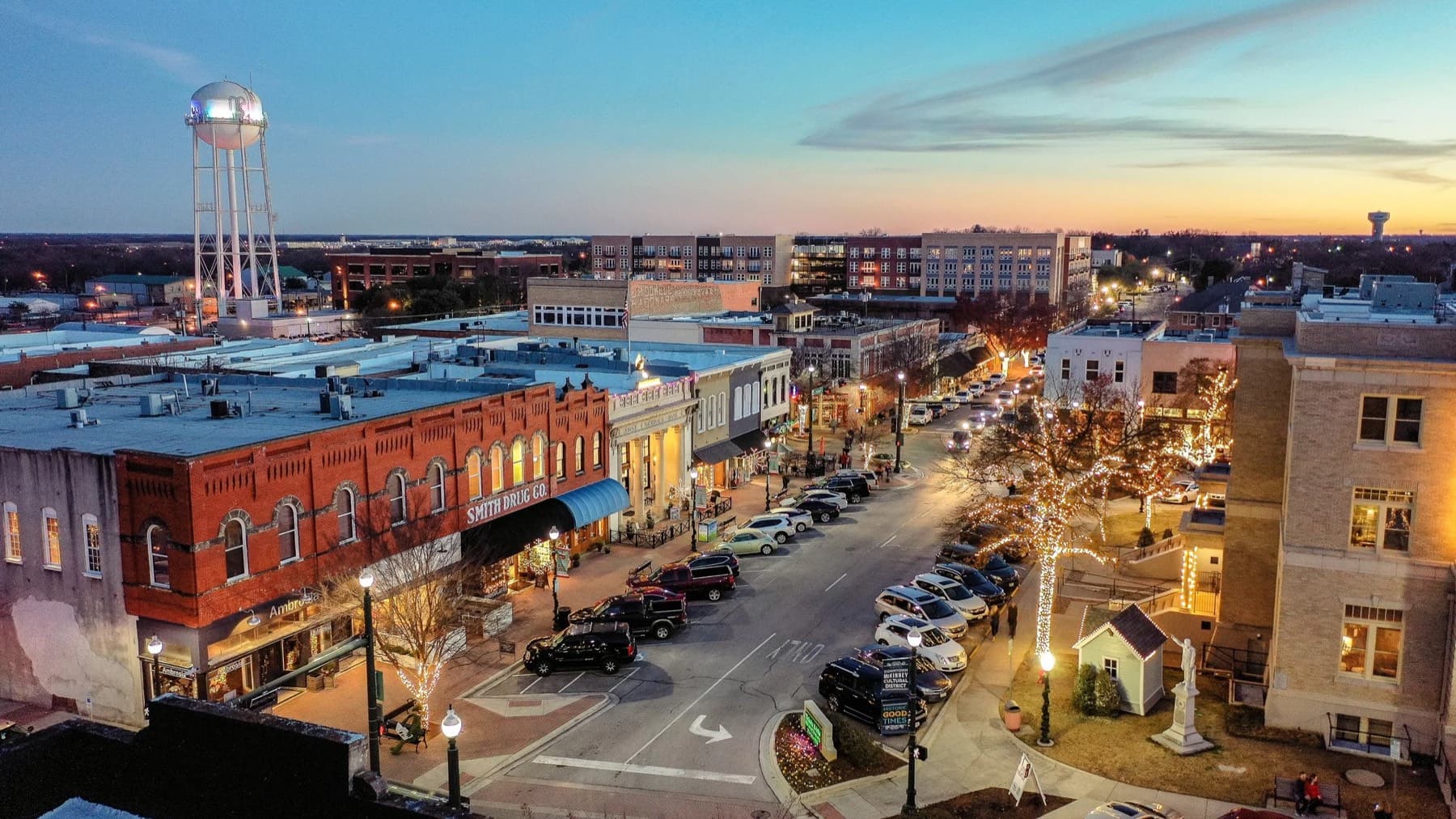
Urban infill and redevelopment support for commercial projects near the courthouse square and surrounding mixed-use streets.
Open market pageCraig Ranch, TX
Master-planned mixed commercial market for office, hospitality-support, and higher-visibility corporate projects.
Open market pageStonebridge Ranch, TX
Neighborhood commercial and service-sector market supporting local retail, office, and community-serving development.
Open market pageAllen, TX
Dense north DFW commercial market with strong retail, office, and service-sector construction demand.
Open market pageFairview, TX
Growth-area market supporting higher-end commercial, healthcare, and mixed retail development along the US-75 corridor.
Open market pageFrequently Asked Questions
What does a shell building delivery include in McKinney?
A shell building delivery from General Contractors of McKinney includes the foundation, structural frame, building envelope, dock and door infrastructure, utility rough-ins to the building, site work and parking, and the landlord certificate of occupancy that allows tenant improvement work to proceed.
How do you design a shell building to appeal to the broadest range of tenants?
We conduct a tenant compatibility review during preconstruction to assess the proposed building specifications — column spacing, clear height, dock count, electrical capacity, truck court depth — against the likely tenant mix for the McKinney submarket. Shell buildings designed for the actual market lease faster.
How do you handle multi-tenant utility metering in a shell building?
We design the shell MEP rough-ins with tenant fit-out in mind — separate electrical metering capability per tenant bay, fire suppression infrastructure positionable for extension, and plumbing stub-ins in locations that work for the expected range of tenant layouts.
How does McKinney's Blackland Prairie clay affect shell building foundations?
Shell buildings on Blackland Prairie clay require the same geotechnical-based foundation design as owner-occupied buildings. A speculative shell with foundation problems after delivery is a landlord liability. We do not use generic foundation assumptions.
What areas do you serve for shell building construction near McKinney?
We serve McKinney and adjacent communities including Allen, Frisco, Fairview, Lucas, Princeton, Melissa, Anna, and Celina across Collin County.