Industrial Facility Expansion for McKinney and Collin County
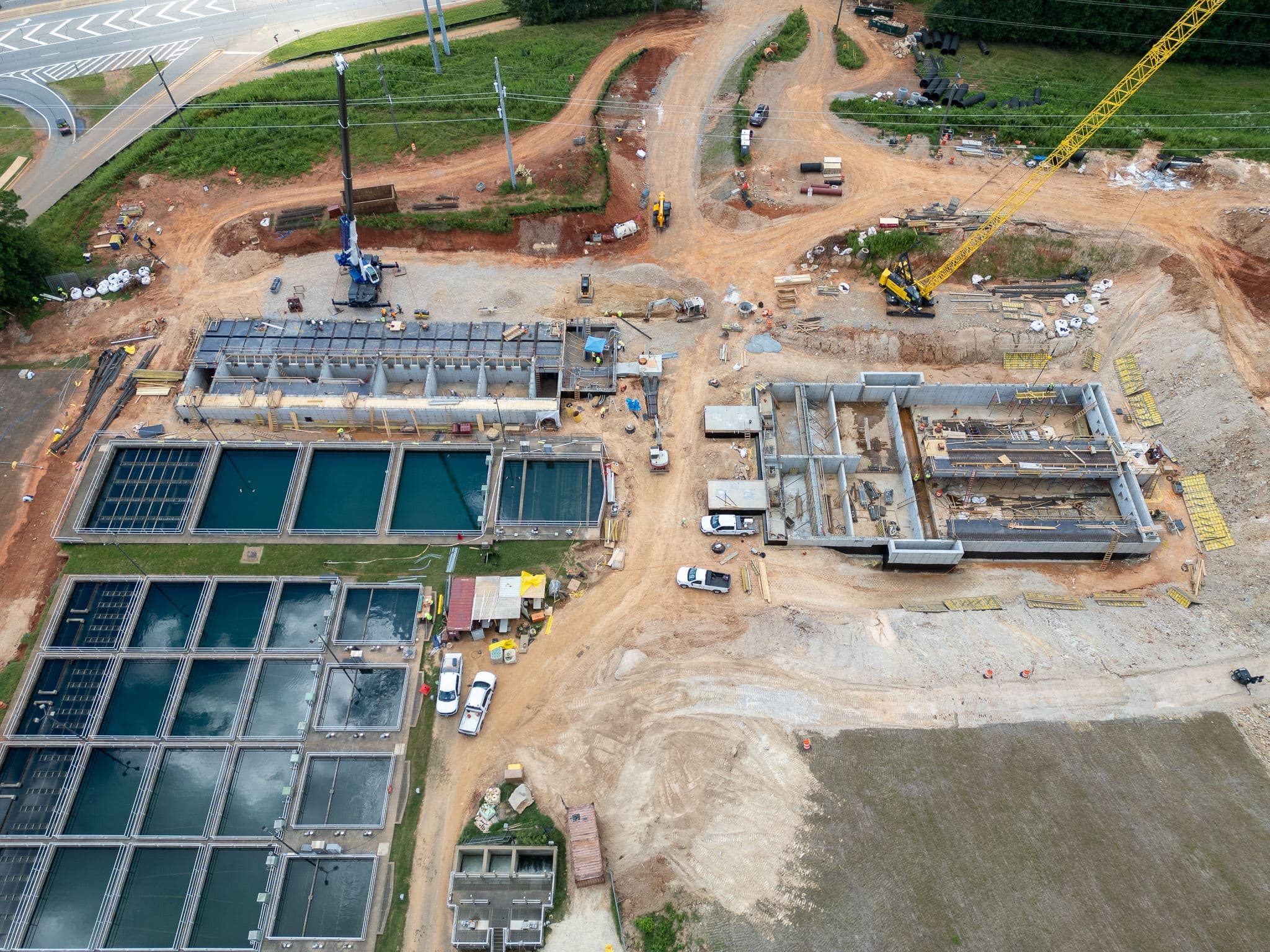
General Contractors of McKinney manages industrial facility expansions for owners who need to grow their footprint in McKinney and Collin County without relocating. Expansion projects differ from ground-up construction in a fundamental way — the existing operation is running, and the contractor's work cannot interrupt it. That constraint shapes every aspect of the project, from how we phase foundation work near existing slabs to how we sequence utility tie-ins to how we manage contractor parking and material delivery around active production traffic.
McKinney's industrial zones along US-75 and the Sam Rayburn Tollway have attracted significant manufacturing and distribution growth over the past decade, and many of the facilities built during earlier phases of that growth are now operating at or near capacity. Owners who want to stay in McKinney rather than relocate to a new industrial park in a farther suburb are choosing to expand their existing buildings, add dock positions, upgrade utility capacity, or add mezzanine storage — and they need a contractor who manages the complexity of active-facility construction.
Expansion work in McKinney often involves utility capacity upgrades alongside the physical expansion. Adding dock positions or production space typically requires more electrical capacity, additional compressed air, upgraded fire suppression coverage, and sometimes a new gas service or gas line loop. We assess existing utility capacity as part of preconstruction and identify tie-in and upgrade requirements before construction begins.
- Addition and expansion tied to operating facilities without shutdown
- Dock position additions and loading infrastructure expansion
- Utility capacity upgrades and system extensions
- Mezzanine and elevated storage system construction
- Fire suppression extension and code compliance coordination
Preconstruction Planning for Active Facility Expansions
Industrial expansion preconstruction at General Contractors of McKinney begins with an existing facility assessment — structural drawings review, utility capacity verification, slab condition evaluation, and site survey — so that the expansion is designed from accurate as-built information rather than assumptions that produce field change orders when the excavation reveals something different than expected.
Tie-in planning is the most critical preconstruction task on an expansion project. Where the new addition connects to the existing structure — wall demolition, roof tie-in, slab joint, utility connection — needs to be fully planned and sequenced before field work begins. Phasing the connection so that the existing operation is only exposed to weather, noise, or disruption for the minimum possible window requires detailed planning and realistic scheduling from the start.
Site logistics on an active facility expansion require mapping out contractor staging, material delivery routes, equipment access, and construction fencing in a way that maintains clear separation between contractor activities and daily production or distribution operations. We develop a site logistics plan during preconstruction that the owner can review and that becomes a field protocol, not a general intent document.
- Existing facility structural and utility assessment before design
- Tie-in sequence planning to minimize operational disruption
- Site logistics mapping for contractor and operational traffic separation
- Phased construction planning with production-aware milestones
- Utility capacity upgrade scoping and early service applications
Field Execution in Operating Facilities
Industrial expansion field execution at General Contractors of McKinney follows the site logistics plan daily. Contractor vehicles use designated routes. Material deliveries happen in staging areas that do not cross active operations paths. Noisy demolition work — wall saw cutting, concrete breaking, overhead structure removal — is scheduled during shift changes or off-hours when the owner's team is not running production equipment that is sensitive to vibration or debris.
Wall and roof tie-in work is the highest-risk phase of any active-facility expansion. Removing sections of an existing wall to connect the addition requires weather exposure management, temporary barrier installation, and rapid progression to get the connection enclosed. Our superintendents plan these sequences in detail and execute them on the tightest possible windows to minimize the period when the existing facility is open to weather.
Utility tie-in sequencing on McKinney industrial expansion projects must account for CoServ and Oncor scheduling for service upgrades, which can have multi-week lead times for field work. We schedule utility work with the providers in advance and coordinate planned outage windows with the owner so that production can be rescheduled around the utility interruption rather than discovering the outage on the day it happens.
- Daily site logistics protocol enforcement for active facility operations
- Wall and roof tie-in sequencing with weather exposure management
- Utility outage scheduling coordinated with owner production planning
- Blackland Prairie subgrade management for expansion foundation work
- Post-construction facility inspection and owner walkthrough
McKinney Industrial Expansion Construction Service Area
General Contractors of McKinney manages industrial facility expansions across McKinney, Allen, Frisco, Fairview, Lucas, Princeton, Melissa, Anna, and Celina. We are experienced with Collin County permitting for additions and expansions and work in both CoServ and Oncor utility territories.
Whether your expansion involves adding dock positions, extending a production hall, upgrading utility capacity, or adding mezzanine storage to an existing distribution facility, our team provides thorough preconstruction assessment, phased construction planning, and field execution that keeps your operation running throughout the project.
Related Markets
McKinney, TX
Primary market for commercial and industrial construction across central McKinney, US-75 frontage, and major growth corridors.
Open market pageDowntown McKinney, TX
Urban infill and redevelopment support for commercial projects near the courthouse square and surrounding mixed-use streets.
Open market pageCraig Ranch, TX
Master-planned mixed commercial market for office, hospitality-support, and higher-visibility corporate projects.
Open market pageStonebridge Ranch, TX
Neighborhood commercial and service-sector market supporting local retail, office, and community-serving development.
Open market pageAllen, TX
Dense north DFW commercial market with strong retail, office, and service-sector construction demand.
Open market pageFairview, TX
Growth-area market supporting higher-end commercial, healthcare, and mixed retail development along the US-75 corridor.
Open market pageFrequently Asked Questions
Can you expand our facility without shutting down our production operation?
Yes. We build site logistics plans that separate contractor traffic from production operations, schedule noisy or disruptive work during off-hours or shift changes, and phase the construction sequence to minimize the impact on daily operations throughout the project.
How do you manage the structural tie-in between the new addition and our existing building?
We assess existing structural drawings and field conditions in preconstruction so that the tie-in is designed from accurate information. Wall and roof tie-in work is sequenced with weather exposure management and executed as quickly as possible to minimize the period when your facility is open to the elements.
Do you handle utility capacity upgrades as part of an expansion project?
Yes. We assess existing utility capacity in preconstruction and identify upgrade requirements for electrical, gas, compressed air, and fire suppression systems. We coordinate upgrade applications with CoServ or Oncor early to account for lead times that can reach multi-week windows for field installation work.
How does McKinney's Blackland Prairie clay affect expansion foundation work?
Expansion foundations on Blackland Prairie clay require the same careful geotechnical-based scoping as ground-up projects, with the added complexity of matching the existing foundation system. We assess existing foundation conditions and design expansion foundations that perform consistently with the existing structure.
What types of industrial expansion projects do you manage in McKinney?
We manage building additions, dock expansions, mezzanine and elevated storage construction, utility capacity upgrades, production hall extensions, and office additions to existing industrial and manufacturing facilities across McKinney and Collin County.